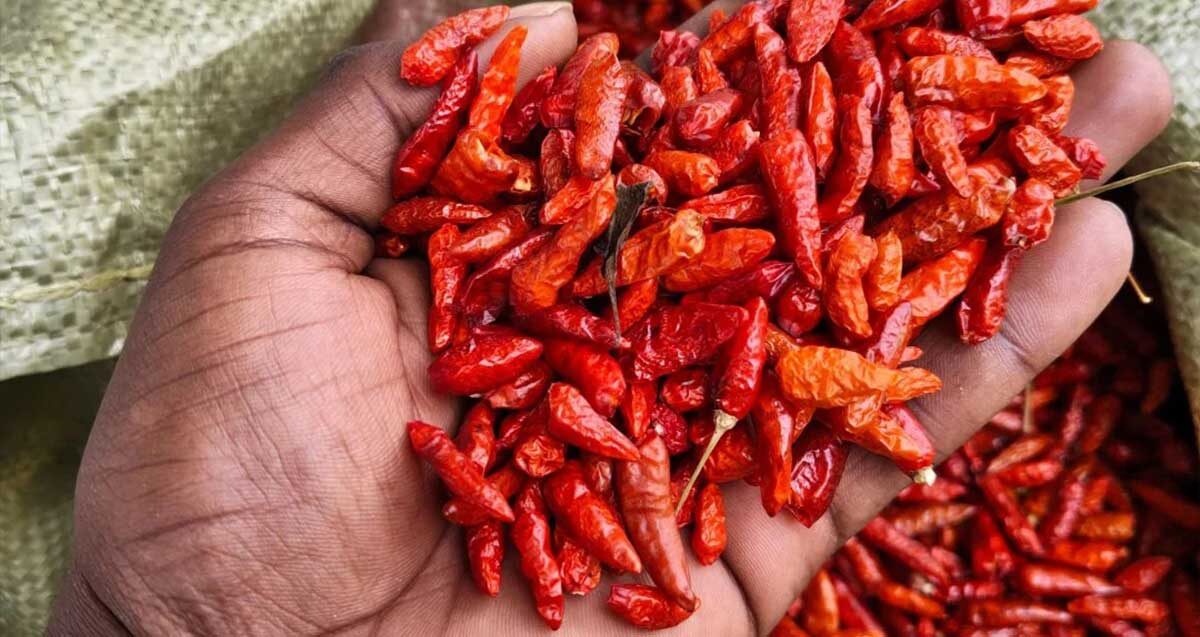
In the world of heat, the African Bird’s Eye Chili (ABEC), known locally in Tanzania as Pilipili Kichaa, is a giant in a small package. While larger chilies rely on volume, the ABEC relies on intensity. For spice extractors and hot sauce artisans, sourcing the right grade of this chili is a balance of chemistry and color. This guide explores what makes the Tanzanian variety a global favorite for those who demand serious heat.
"In the spice trade, color is the first sign of quality, but the Scoville unit is the final proof of value."
1. Understanding the Heat: Scoville Heat Units (SHU)
The Scoville scale measures the concentration of capsaicin—the compound that creates the “burn.”
The Intensity: Tanzanian Bird’s Eye Chili typically ranges from 100,000 to 175,000 SHU.
Why it varies: Heat levels are influenced by soil stress and sunlight. Chilies grown in the arid, sunny regions of Tanzania tend to produce more capsaicin as a natural defense mechanism, resulting in a more potent product than those grown in cooler climates.
2. Color Retention and Dehydration
For many industrial buyers, the color of the chili is just as important as the heat. A deep, vibrant red indicates high quality and correct processing.
Sun-Drying on Raised Beds: We avoid ground-drying to prevent contamination and “browning.” By using raised drying beds, air circulates around the pods, locking in the natural red pigment (carotenoids).
The “Yellow” Factor: Lower-grade shipments often contain yellow or pale pods. At Tillya Harvest Traders, we perform a secondary hand-sorting to ensure your batch is visually consistent—a critical factor for sauce manufacturers who need a uniform product color.
3. Stem vs. Stemless (Clipped)
One of the biggest decisions for a buyer is whether to source with or without the stems (peduncles).
With Stems: Often cheaper, but increases the weight and requires processing at the destination.
Stemless (Clipped): Offers a “cleaner” product for immediate grinding or extraction. While it carries a premium price, it significantly reduces the labor costs and waste for the importer.
4. Purity and Aflatoxin Prevention
Chilies are susceptible to molds if moisture is not handled correctly.
Moisture Target: We ensure our dried chilies maintain a moisture level between 10% and 12%.
Aflatoxin Testing: Because chilies are often used in concentrated forms, we strictly monitor for aflatoxins, ensuring every shipment complies with stringent EU and US food safety limits.
Conclusion
Sourcing Pilipili Kichaa is about more than just finding the hottest pepper; it’s about finding a consistent, clean, and vibrant ingredient. Whether you are formulating a new spicy condiment or extracting capsaicin for industrial use, the Tanzanian Bird’s Eye Chili offers a potency and purity that is hard to match.