The Rise of Tanzania Peaberry: What Makes this Coffee Unique?
Uncategorized

In a typical coffee cherry, two flat-sided beans grow face-to-face. However, in roughly 5% of the harvest, nature does something different: only one seed is fertilized, resulting in a single, oval-shaped bean known as a Peaberry (PB). While this happens in coffee regions globally, the Tanzania Peaberry has ascended to legendary status among connoisseurs. But what exactly makes this “evolutionary fluke” so valuable?


"A Peaberry is nature's way of concentrating all the energy of a coffee cherry into a single, perfect pearl."

1. Concentrated Flavor Profile

Because the coffee tree provides nutrients to only one bean instead of two, the Peaberry is widely believed to be more nutrient-dense.

  • The Result: A more intense flavor profile characterized by bright, wine-like acidity and a medium body.

  • Cupping Notes: Look for complex hints of blackcurrant, citrus, and a chocolatey finish that is far more pronounced than its flat-bean siblings.

2. The Volcanic Terroir of Kilimanjaro

Geography plays a massive role in the Tanzania Peaberry’s fame. Most of our PB grade coffee is grown on the slopes of Mount Kilimanjaro and the Mount Meru region.

  • Soil: The volcanic soil is rich in minerals that contribute to the bean’s vibrant acidity.

  • Altitude: Grown at 1,400 to 1,800 meters, the beans mature slowly, allowing sugars to develop more deeply.

3. Superior Roasting Consistency

Professional roasters often prefer Peaberries for a purely physical reason: their shape.

  • Heat Transfer: Because they are round, Peaberries roll more easily in the roasting drum. This leads to a more even heat distribution compared to flat beans, which can occasionally scorch on one side.

  • Precision: This roundness allows roasters to achieve a highly consistent “City” or “Full City” roast, bringing out the delicate floral aromas without bitterness.

4. Rarity and Sourcing

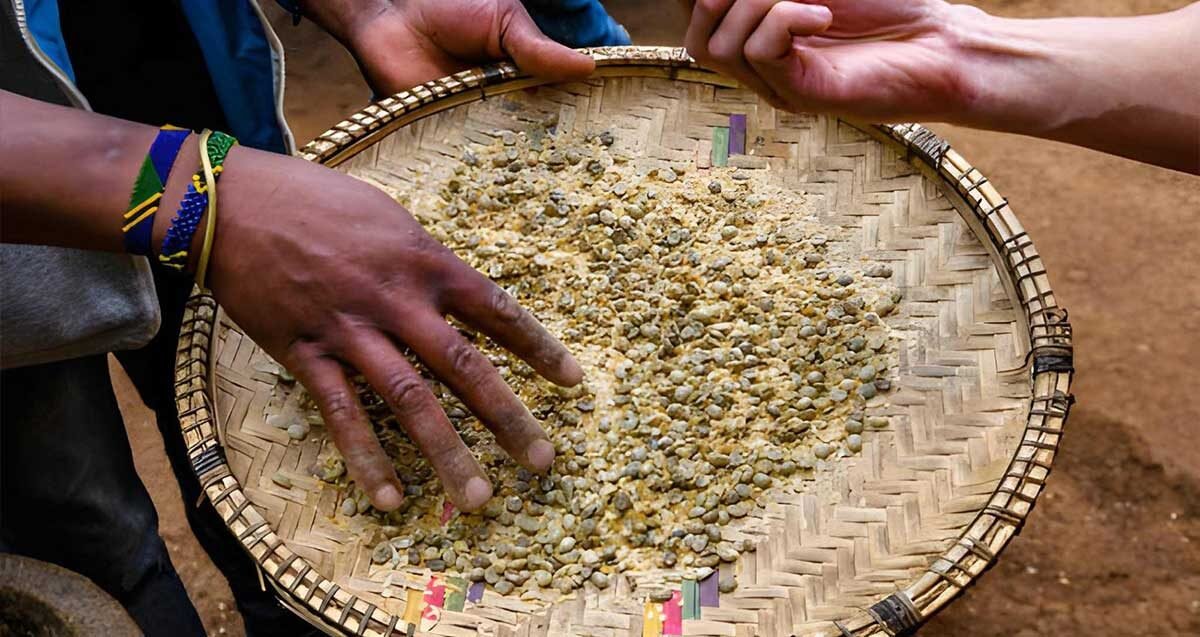
Since Peaberries must be painstakingly sorted from the rest of the harvest using specialized sieves, they are considered a “specialty grade.”

  • Tillya Harvest Traders works with washing stations that prioritize the separation of PB grades during the parchment stage, ensuring that our clients receive a pure lot with zero “elephant” or “shell” bean defects.

Conclusion

The Tanzania Peaberry is no longer a hidden gem; it is a staple for any specialty coffee shop looking to offer an East African cup with a story. Its rare shape, coupled with the legendary volcanic terroir of Tanzania, makes it a high-demand item that consistently outperforms on the cupping table.

Post a Comment

Your email address will not be published. Required fields are marked *